Snake fence installation
What a pro install looks like from the first visit to the final walk of the fence line, what it costs, and how to pick the right installer.
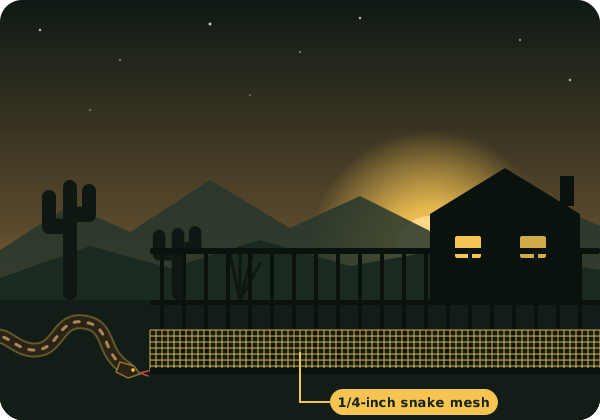
Short answer: A professional installer walks your property, measures the fence line, then fastens 1/4-inch metal mesh along the bottom of your fence, buries or seals the bottom edge, and closes every gate and drain to 1/4 inch. Most yards take a day or two. Installed cost commonly runs $8 to $25 per foot.
Key facts
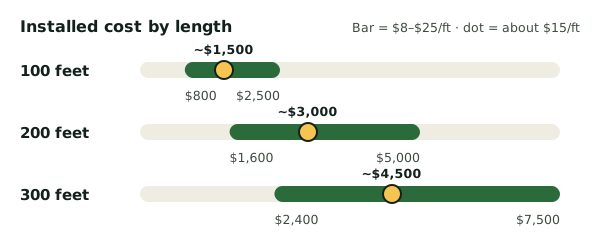
- Installed snake-proof fencing typically runs about $8 to $25 per linear foot; a 200-foot perimeter commonly costs about $1,600 to $5,000. [1]
- Each gate adds roughly $75 to $500, depending on width and sealing work. [2]
- Extension guidance: 1/4-inch galvanized mesh, about 36 inches wide, bottom buried at least 6 inches, top slanted outward. [3]
- Gaps of about 1/3 inch let baby rattlesnakes through, so mesh must be 1/4 inch or smaller. [4]
- Arizona requires a licensed contractor when labor and materials exceed $1,000 or a permit is needed. [5]
- Texas has no statewide license for general construction; some cities require registration or permits. [6]
What happens, step by step
- Site visit. The installer walks the line, counts gates and drains, and looks at slope, rock and the fence you have now.
- Written quote. Mesh size and metal, height, how the bottom is buried or sealed, each gate and drain, and the price. Check it against what a good quote includes.
- Clear the line. Brush, rocks and debris come off a strip along the fence.
- Bottom first. A trench along the base, or a seal to concrete or rock where digging isn't possible.
- Hang the mesh. Fastened with screws, washers or clips, seams overlapped, top leaned slightly out.
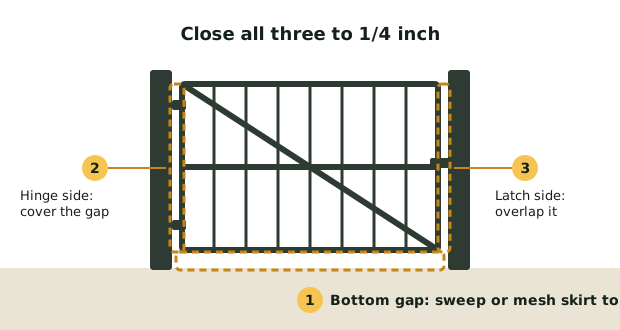
- Gates and drains. Bottom, hinge and latch sides of each gate closed; each drain covered with mesh that still passes water.
- Final walk. You and the installer walk the whole line together looking for any gap over 1/4 inch.
How long it takes
A typical backyard is a day or two. Long perimeters, many gates, rocky ground or slopes take longer. Book before spring: snakes become active as it warms, and installers get busy.
What it costs
Get a range for your yard with the cost calculator or the planner.
Picking an installer
- Any license your state requires. In Arizona, look it up on the Registrar of Contractors site.
- Proof of insurance
- 1/4-inch mesh, named in writing
- Every gate and drain listed in the quote
- A clear answer on how the bottom is buried or sealed
Every installer we send requests to meets our installer standards.
Sources
- LatestCost: Snake proof fence cost (2026)
- LatestCost: Snake fence installation cost for U.S. homes (2026)
- Texas A&M AgriLife Extension, Wildlife Damage Management: Snakes
- Rattlesnake Solutions: Snake fence industry standards
- Arizona Registrar of Contractors: License classifications
- PermitFlow: Texas contractor license guide
Get a free snake fence quote
Tell us about your property. We send it to one verified local installer, never a list. Free, no obligation.
✓ 1 verified installer, not 5 · ✓ Free · ✓ No obligation
Common questions
How long does snake fence installation take?
Most backyards take a day or two. Long perimeters, many gates, rocky ground or slopes take longer.
How much does it cost to install a snake fence?
Installed snake fencing commonly runs about $8 to $25 per linear foot, so a 200-foot yard is often $1,600 to $5,000. Each gate adds roughly $75 to $500.
Do I need a permit for a snake fence?
Usually not, because a mesh snake fence is only about 3 feet tall. Floodplains, new masonry bases and HOA rules are the common exceptions. Check with your city and HOA.
Can it go on my existing fence?
Yes. Installers fasten mesh to wrought iron, wood, block walls and chain link. On open land they set posts for a new mesh barrier.